
Endocrine emergencies are classic USMLE Step 2 CK material because the order of treatment matters. Giving the right drug in the wrong order can harm the patient, and the exam tests exactly that. Try these three questions, then check the explanations.
Question 1: A young man with type 1 diabetes, vomiting and deep breathing
A 19-year-old man with type 1 diabetes has had vomiting and abdominal pain for 1 day. He has deep, rapid breathing. Pulse is 118/min and blood pressure is 102/64 mm Hg. Serum glucose is 520 mg/dL, potassium 5.6 mEq/L, bicarbonate 9 mEq/L, and arterial pH 7.12. Urine ketones are strongly positive. An intravenous infusion of 0.9% saline has been started. Which of the following is the most appropriate next step?
A. Intravenous sodium bicarbonate
B. Intravenous regular insulin infusion
C. Intravenous potassium chloride before any insulin
D. Subcutaneous long-acting insulin only
E. Intravenous phosphate replacement
Question 2: Fever, atrial fibrillation and agitation in a patient with Graves disease
A 34-year-old woman with untreated Graves disease develops a urinary tract infection. She is now confused and agitated, with a temperature of 40.1°C (104.2°F), an irregular pulse of 150/min, vomiting and diarrhea. Intravenous propranolol has been started. Which of the following should be given at least 1 hour before potassium iodide?
A. Radioactive iodine
B. Levothyroxine
C. Propylthiouracil
D. Aspirin
E. Emergency total thyroidectomy
Question 3: Hypotension after surgery that does not respond to vasopressors
A 45-year-old man with rheumatoid arthritis has taken prednisone 20 mg daily for 3 years. His prednisone was stopped when he was admitted for an elective hip replacement. A few hours after surgery, he becomes hypotensive (blood pressure 78/40 mm Hg) despite 3 liters of IV fluids and a norepinephrine infusion. Serum sodium is 131 mEq/L and glucose is 62 mg/dL. Which of the following is the most appropriate next step?
A. Increase the norepinephrine dose and add vasopressin
B. Oral fludrocortisone alone
C. Perform a cosyntropin stimulation test before any treatment
D. Intravenous hydrocortisone
E. Broad-spectrum antibiotics only
Key takeaways
- DKA: fluids first, then insulin if K⁺ is at least 3.3; replace potassium as it falls.
- Thyroid storm: beta-blocker, then PTU or methimazole at least 1 hour before iodine, plus steroids.
- Shock unresponsive to pressors in a patient on chronic steroids = adrenal crisis: give IV hydrocortisone now.
More USMLE practice questions
- All USMLE Step 2 CK questions
- Psychiatry: panic disorder and agoraphobia
- Insulin, neurofibromatosis and lead poisoning
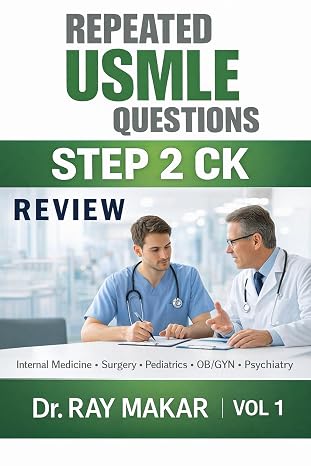
Want 100+ more clinical questions like these?
Get Repeated USMLE Questions Step 2 CK Review Vol 1 by Dr. Ray Makar
As an Amazon Associate, I earn from qualifying purchases.
Written and reviewed by Dr. Ray Makar, MD, dermatologist with 20 years of clinical practice. Last reviewed: October 2026. For exam preparation only, not medical advice.