
Psychiatric medication emergencies are high-yield on USMLE Step 2 CK. Neuroleptic malignant syndrome and serotonin syndrome look similar, so the exam tests the features that separate them, plus drug interactions that cause lithium toxicity. Try these three questions.
Question 1: Fever and “lead-pipe” rigidity after starting an antipsychotic
A 28-year-old man with schizophrenia was started on haloperidol 4 days ago. He is now confused, with a temperature of 40.2°C (104.4°F), pulse 124/min and fluctuating blood pressure. He is sweating heavily and has severe “lead-pipe” rigidity of all extremities. Reflexes are normal, and there is no clonus. Serum creatine kinase is 18,000 U/L. Haloperidol is stopped and cooling and IV fluids are started. Which of the following drugs is most appropriate to add?
A. Cyproheptadine
B. Benztropine
C. Dantrolene
D. Additional haloperidol
E. Physostigmine
Question 2: Twitching, diarrhea and fever after a new pain medication
A 42-year-old woman taking sertraline for depression was prescribed tramadol for back pain 2 days ago. She is now agitated and sweating, with diarrhea. Temperature is 38.9°C (102°F) and pulse is 118/min. Pupils are dilated. Deep tendon reflexes are brisk, with inducible clonus at the ankles that is more prominent in the legs. Both medications are stopped and benzodiazepines are given. Which of the following drugs is most appropriate if her symptoms persist?
A. Cyproheptadine
B. Dantrolene
C. Bromocriptine
D. Haloperidol
E. Naloxone
Question 3: Tremor and confusion in a patient with bipolar disorder
A 58-year-old man with bipolar disorder has been stable on lithium for 6 years. Three weeks ago, his primary care physician started a new medication for blood pressure. He now has a coarse tremor, unsteady gait, vomiting and confusion. His serum lithium level is 2.6 mEq/L. Which of the following newly added medications most likely caused this?
A. Amlodipine
B. Doxazosin
C. Hydralazine
D. Hydrochlorothiazide
E. Metoprolol
Key takeaways
- NMS: antipsychotic, rigidity, fever, autonomic instability, very high CK; treat with dantrolene or bromocriptine.
- Serotonin syndrome: clonus, hyperreflexia, diarrhea, mydriasis; treat with benzodiazepines and cyproheptadine.
- Thiazides, ACE inhibitors, ARBs and NSAIDs raise lithium levels; severe toxicity needs hemodialysis.
More USMLE practice questions
- All USMLE Step 2 CK questions
- Psychiatry: panic disorder and agoraphobia
- Quinidine, metoclopramide and buspirone
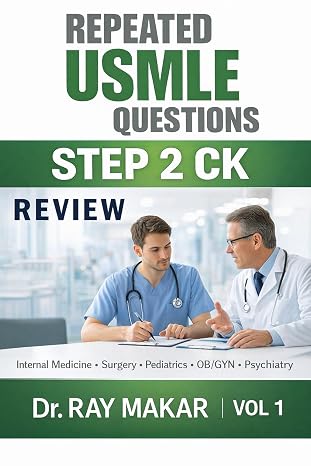
Want 100+ more clinical questions like these?
Get Repeated USMLE Questions Step 2 CK Review Vol 1 by Dr. Ray Makar
As an Amazon Associate, I earn from qualifying purchases.
Written and reviewed by Dr. Ray Makar, MD, dermatologist with 20 years of clinical practice. Last reviewed: October 2026. For exam preparation only, not medical advice.
FREE USMLE PDFs
Get 80 free practice questions
Four free sampler PDFs by Dr. Ray Makar: Step 1 (Pathology & Pharmacology) and Step 2 CK (Medicine, Surgery & Pediatrics), in both Review style and USMLE style, with answers and explanations. Also useful for NEET-PG, INI-CET and FMGE.
Download the free PDFs See the full books →