
Acid-base questions appear on every USMLE Step 1 exam. Use the same steps every time: pH, then the primary disorder, then expected compensation, then the anion gap. Try these three questions, then open the explanations.
Question 1: Several days of vomiting
A 34-year-old woman has had repeated vomiting for 4 days due to a viral illness. She is lightheaded. Arterial blood gas shows pH 7.52, PaCO2 48 mm Hg and HCO3⁻ 38 mEq/L. Serum potassium is 2.9 mEq/L, and urine chloride is low. Which of the following best describes her acid-base status?
A. Respiratory acidosis with metabolic compensation
B. Metabolic alkalosis with appropriate respiratory compensation
C. Mixed metabolic alkalosis and respiratory alkalosis
D. Primary respiratory alkalosis
E. Metabolic acidosis with respiratory compensation
Question 2: Ringing in the ears after a large overdose
A 22-year-old woman is brought to the emergency department 3 hours after taking a large number of aspirin tablets. She has tinnitus, nausea and rapid breathing. Arterial blood gas shows pH 7.45, PaCO2 22 mm Hg and HCO3⁻ 15 mEq/L. Serum sodium is 140 mEq/L and chloride is 104 mEq/L. Which of the following best describes her acid-base status?
A. Pure metabolic acidosis with appropriate respiratory compensation
B. Pure respiratory alkalosis with renal compensation
C. Normal anion gap metabolic acidosis
D. Metabolic alkalosis
E. Mixed respiratory alkalosis and high anion gap metabolic acidosis
Question 3: Profuse watery diarrhea and a low bicarbonate
A 40-year-old man has had profuse watery diarrhea for 5 days. Laboratory studies show serum sodium 136 mEq/L, chloride 114 mEq/L, HCO3⁻ 14 mEq/L and potassium 3.0 mEq/L. Arterial pH is 7.29 and PaCO2 is 29 mm Hg. Which of the following is the most likely cause of this acid-base pattern?
A. Diabetic ketoacidosis
B. Lactic acidosis
C. Loss of bicarbonate in the stool
D. Methanol ingestion
E. Prolonged vomiting
Key takeaways
- Vomiting: hypochloremic, hypokalemic metabolic alkalosis; low urine chloride means saline-responsive.
- Salicylate toxicity: mixed respiratory alkalosis and high anion gap metabolic acidosis.
- Diarrhea: normal anion gap (hyperchloremic) metabolic acidosis; use Winter’s formula to check compensation.
More USMLE practice questions
- All USMLE Step 1 questions
- Aspirin toxicity, furosemide and fluoxetine
- Insulin, neurofibromatosis and lead poisoning
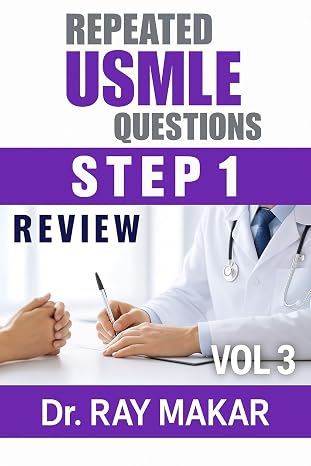
Want more Step 1 questions like these?
Get Repeated USMLE Questions Step 1 Review Vol 3 by Dr. Ray Makar
As an Amazon Associate, I earn from qualifying purchases.
Written and reviewed by Dr. Ray Makar, MD, dermatologist with 20 years of clinical practice. Last reviewed: October 2026. For exam preparation only, not medical advice.
FREE USMLE PDFs
Get 80 free practice questions
Four free sampler PDFs by Dr. Ray Makar: Step 1 (Pathology & Pharmacology) and Step 2 CK (Medicine, Surgery & Pediatrics), in both Review style and USMLE style, with answers and explanations. Also useful for NEET-PG, INI-CET and FMGE.
Download the free PDFs See the full books →