
Diuretics are tested on USMLE Step 1 through their site of action, their electrolyte effects and their side effects. If you know where each one acts in the nephron, most questions become easy. Pick your answer first, then open the explanation.
Question 1: A diuretic that raises calcium and glucose
A 60-year-old woman with hypertension starts a new once-daily diuretic. Three months later, laboratory studies show serum sodium 132 mEq/L, potassium 3.2 mEq/L, bicarbonate 31 mEq/L, calcium 10.6 mg/dL, uric acid 8.4 mg/dL and fasting glucose 118 mg/dL. Her calcium, glucose and uric acid were normal before treatment. This drug most likely acts at which of the following sites?
A. Na⁺-K⁺-2Cl⁻ cotransporter in the thick ascending limb
B. Na⁺-Cl⁻ cotransporter in the distal convoluted tubule
C. Carbonic anhydrase in the proximal convoluted tubule
D. Epithelial sodium channels (ENaC) in the collecting duct
E. Aldosterone receptors in the collecting duct
Question 2: A loop diuretic for a patient with a sulfa allergy
A 68-year-old man with heart failure has worsening leg edema and crackles in both lungs. He needs a loop diuretic. He has a documented history of a severe allergic reaction to sulfonamide drugs. Which of the following diuretics is the most appropriate choice?
A. Furosemide
B. Bumetanide
C. Ethacrynic acid
D. Hydrochlorothiazide
E. Acetazolamide
Question 3: A new heart failure drug added to an ACE inhibitor
A 55-year-old woman with heart failure with reduced ejection fraction has been stable on lisinopril and carvedilol. Spironolactone is added to her regimen. Which of the following laboratory abnormalities is the most important to monitor for?
A. Hypokalemia
B. Hypercalcemia
C. Hyperglycemia
D. Metabolic alkalosis
E. Hyperkalemia
Key takeaways
- Thiazides: DCT; hyperglycemia, hyperlipidemia, hyperuricemia, hypercalcemia.
- Loop diuretics lose calcium; ethacrynic acid is the loop diuretic for sulfa allergy.
- Spironolactone + ACE inhibitor: watch for hyperkalemia.
More USMLE practice questions
- All pharmacology questions
- Aspirin toxicity, furosemide and fluoxetine
- Clonidine, cimetidine and tachyphylaxis
- All USMLE Step 1 questions
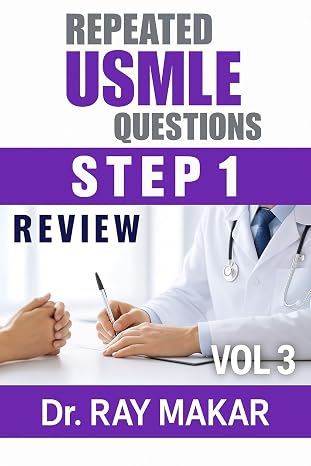
Want more Step 1 questions like these?
Get Repeated USMLE Questions Step 1 Review Vol 3 by Dr. Ray Makar
As an Amazon Associate, I earn from qualifying purchases.
Written and reviewed by Dr. Ray Makar, MD, dermatologist with 20 years of clinical practice. Last reviewed: October 2026. For exam preparation only, not medical advice.
FREE USMLE PDFs
Get 80 free practice questions
Four free sampler PDFs by Dr. Ray Makar: Step 1 (Pathology & Pharmacology) and Step 2 CK (Medicine, Surgery & Pediatrics), in both Review style and USMLE style, with answers and explanations. Also useful for NEET-PG, INI-CET and FMGE.
Download the free PDFs See the full books →