
Hypersensitivity reactions are one of the most reliable Immunology topics on USMLE Step 1. You need to match each clinical picture to its mechanism: IgE, antibody against cells, immune complexes or T cells. Pick your answer first, then open the explanation.
Question 1: Dark urine and swelling two weeks after a sore throat
An 8-year-old boy is brought to the physician because of puffy eyes and cola-colored urine. Two weeks ago he had a sore throat with fever. Blood pressure is 138/88 mm Hg. Urinalysis shows red blood cell casts. Serum C3 level is low, and anti-streptolysin O titer is elevated. Which of the following best describes the mechanism of his kidney disease?
A. IgE-mediated mast cell degranulation
B. Antibodies directed against the glomerular basement membrane
C. Direct cytotoxic T-cell attack on glomeruli
D. Deposition of antigen-antibody complexes with complement activation
E. Direct bacterial invasion of the kidney
Question 2: Fever and red urine minutes into a blood transfusion
A 60-year-old man undergoing surgery receives a unit of packed red blood cells. Within 10 minutes he develops fever, chills, back pain and hypotension, and his urine turns red. A clerical error is discovered: he is blood type O and received type A blood. Which of the following is the mechanism of this reaction?
A. Preformed IgM antibodies binding to red cell antigens, activating complement
B. IgE antibodies binding to donor plasma proteins
C. Immune complex deposition in small vessels
D. Donor T cells attacking recipient tissue
E. Donor antibodies against recipient leukocytes
Question 3: A skin test read two to three days later
A 26-year-old nurse has a tuberculin skin test as part of her annual employment screening. Purified protein derivative is injected into the skin of her forearm. Seventy-two hours later, there is a 14-mm area of induration at the site. Which of the following cells are primarily responsible for this reaction?
A. Mast cells and basophils
B. Neutrophils activated by immune complexes
C. Eosinophils
D. B cells producing IgG
E. Sensitized CD4+ T cells that recruit and activate macrophages
Key takeaways
- Type II: antibodies against cell-surface antigens (e.g., hemolytic transfusion reaction).
- Type III: immune complexes + complement, low C3 (e.g., poststreptococcal GN, serum sickness).
- Type IV: T cell-mediated and delayed 48–72 hours (e.g., PPD test, contact dermatitis).
More USMLE practice questions
- All USMLE Step 1 questions
- Dermatology: pemphigus vs bullous pemphigoid
- Slipped capital femoral epiphysis and childhood hip disorders
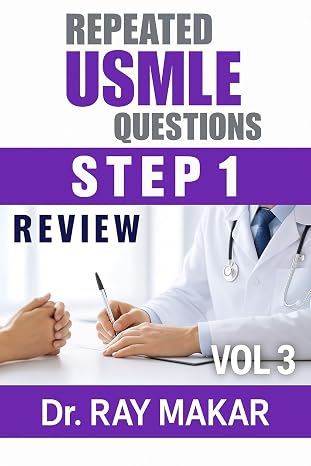
Want more Step 1 questions like these?
Get Repeated USMLE Questions Step 1 Review Vol 3 by Dr. Ray Makar
As an Amazon Associate, I earn from qualifying purchases.
Written and reviewed by Dr. Ray Makar, MD, dermatologist with 20 years of clinical practice. Last reviewed: October 2026. For exam preparation only, not medical advice.
FREE USMLE PDFs
Get 80 free practice questions
Four free sampler PDFs by Dr. Ray Makar: Step 1 (Pathology & Pharmacology) and Step 2 CK (Medicine, Surgery & Pediatrics), in both Review style and USMLE style, with answers and explanations. Also useful for NEET-PG, INI-CET and FMGE.
Download the free PDFs See the full books →