
Poisonings and their antidotes are reliable points on USMLE Step 1. The exam often asks for the mechanism of the antidote, not just its name. Here are three practice questions. Pick your answer first, then open the explanation.
Question 1: A farmer with pinpoint pupils, drooling and muscle twitching
A 45-year-old farmer is brought to the emergency department 1 hour after spraying his crops. He is sweating and drooling, with tearing, vomiting, diarrhea and wheezing. Pupils are pinpoint, pulse is 48/min, and there are fasciculations in his arms and chest. Atropine is given. Which additional drug can restore the activity of the affected enzyme if given early?
A. Physostigmine
B. Neostigmine
C. Pralidoxime
D. Naloxone
E. Flumazenil
Question 2: An intentional overdose of a common pain reliever
A 19-year-old woman is brought to the emergency department 6 hours after taking a large number of acetaminophen tablets. She has mild nausea but is otherwise asymptomatic. Her serum acetaminophen level is above the treatment line on the Rumack-Matthew nomogram. The antidote that should be given works mainly by which of the following mechanisms?
A. Inhibiting alcohol dehydrogenase
B. Chelating iron
C. Competitively blocking opioid receptors
D. Alkalinizing the urine
E. Replenishing glutathione
Question 3: Blurred vision after drinking homemade liquor
A 40-year-old man is brought to the emergency department with headache, vomiting and blurred vision. He says his vision looks like he is “in a snowstorm.” He drank homemade liquor the night before. Laboratory studies show a high anion gap metabolic acidosis and an elevated serum osmolal gap. Which of the following is the most appropriate antidote?
A. N-acetylcysteine
B. Fomepizole
C. Deferoxamine
D. Dimercaprol
E. Pralidoxime
Key takeaways
- Organophosphates: atropine for muscarinic effects, pralidoxime to regenerate acetylcholinesterase.
- Acetaminophen: N-acetylcysteine replenishes glutathione; best within 8 hours.
- Methanol and ethylene glycol: fomepizole inhibits alcohol dehydrogenase.
More USMLE practice questions
- All pharmacology questions
- Quinidine, metoclopramide and buspirone
- Insulin, neurofibromatosis and lead poisoning
- All USMLE Step 1 questions
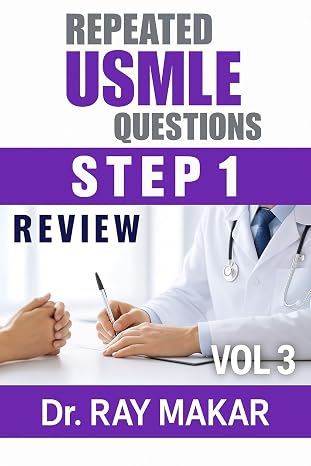
Want more Step 1 questions like these?
Get Repeated USMLE Questions Step 1 Review Vol 3 by Dr. Ray Makar
As an Amazon Associate, I earn from qualifying purchases.
Written and reviewed by Dr. Ray Makar, MD, dermatologist with 20 years of clinical practice. Last reviewed: October 2026. For exam preparation only, not medical advice.
FREE USMLE PDFs
Get 80 free practice questions
Four free sampler PDFs by Dr. Ray Makar: Step 1 (Pathology & Pharmacology) and Step 2 CK (Medicine, Surgery & Pediatrics), in both Review style and USMLE style, with answers and explanations. Also useful for NEET-PG, INI-CET and FMGE.
Download the free PDFs See the full books →